
Introduction to Kyoto’s Living Cultural Treasures
Walking through the historic streets of Kyoto, visitors often encounter elegantly dressed women in exquisite kimonos, their faces adorned with traditional white makeup. These captivating figures are maiko and geiko (the Kyoto term for geisha), living embodiments of Japan’s refined cultural heritage who have preserved centuries-old traditions in the modern world.
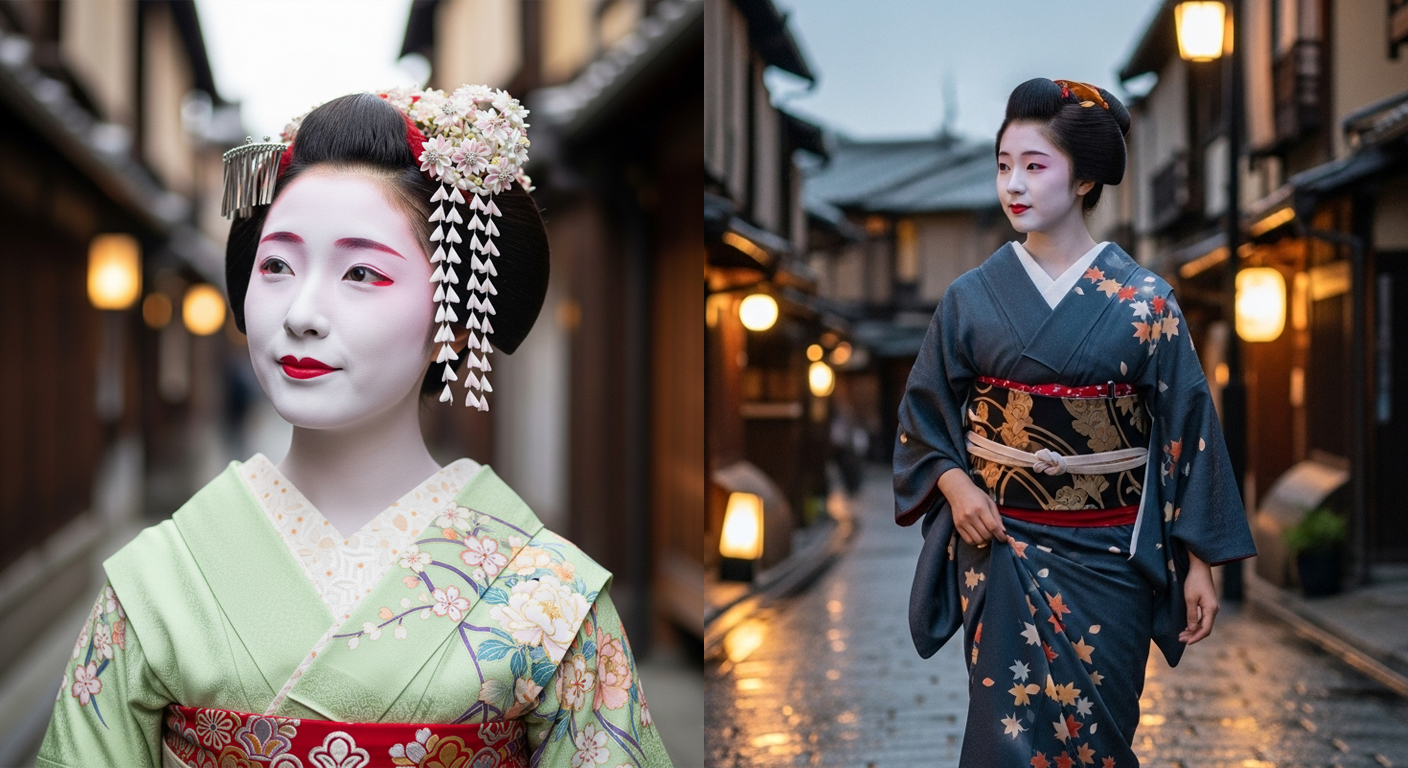
For foreign tourists, understanding the distinction between maiko and geiko enhances appreciation for this sophisticated art form. More importantly, knowing proper etiquette ensures respectful interaction with these cultural artists who dedicate their lives to preserving Japan’s traditional entertainment arts.
Understanding Maiko: The Dancing Apprentices
Who Are Maiko?
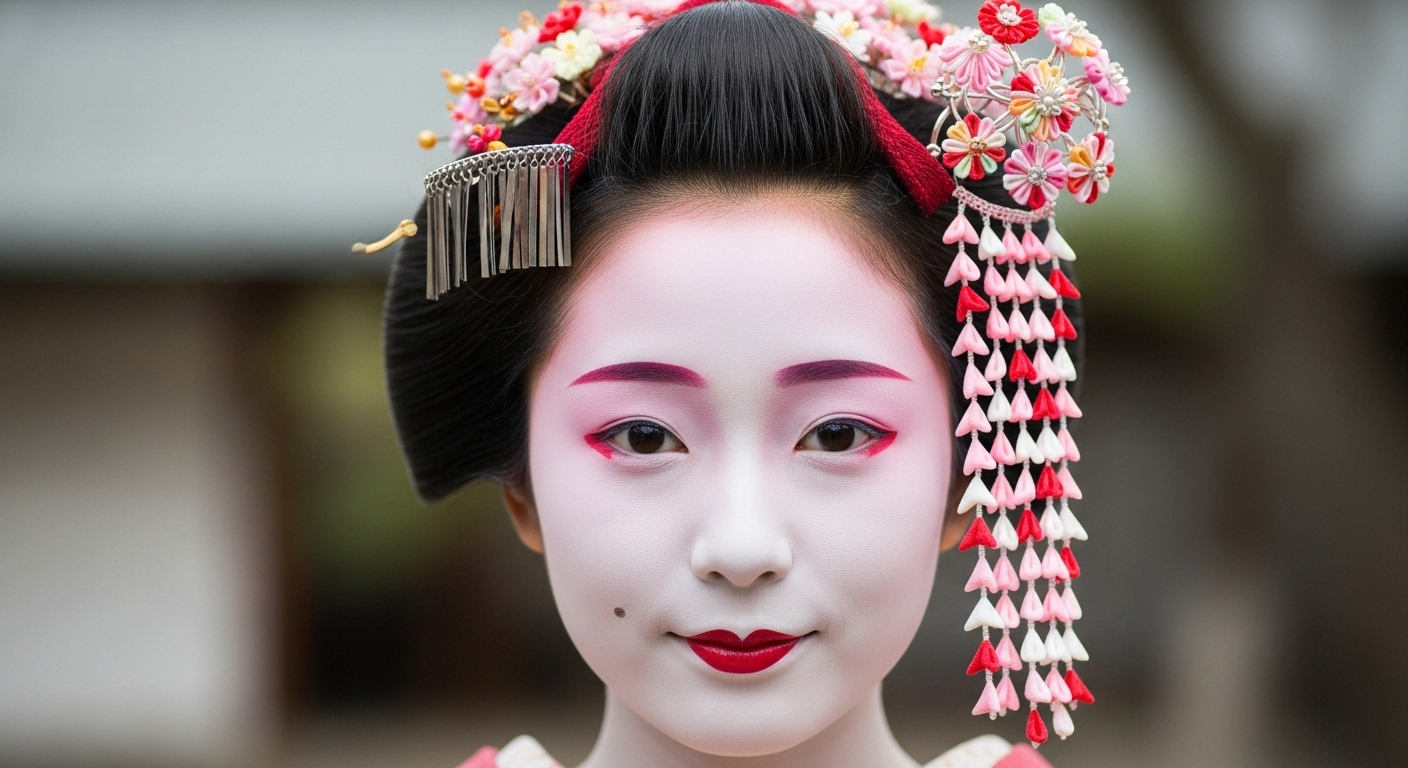
Maiko (舞妓), literally meaning “dancing child,” are young apprentices typically aged 15-20 who are training to become professional geiko. Unique to Kyoto, maiko represent youth, purity, and dedication to traditional Japanese arts. Their striking appearance and graceful demeanor make them particularly popular among international visitors.
The Maiko Training Journey
The path to becoming a maiko requires extraordinary commitment. Young women who aspire to this profession must:
- Live in an okiya (geisha house) for approximately 5 years under the guidance of an “okasan” (mother figure)
- Follow strict lifestyle rules including no personal relationships, limited use of modern technology, and restricted access to contemporary entertainment
- Master traditional arts including Japanese dance, shamisen playing, tea ceremony, and conversation skills
- Maintain physical discipline such as sleeping on wooden pillows (takamakura) to preserve elaborate hairstyles
The journey begins as “shikomi-san” (house servant), progresses to “minarai-san” (learning by observation), and culminates in the “mise-dashi” ceremony marking their official debut as maiko.
Understanding Geiko: The Accomplished Artists
Who Are Geiko?
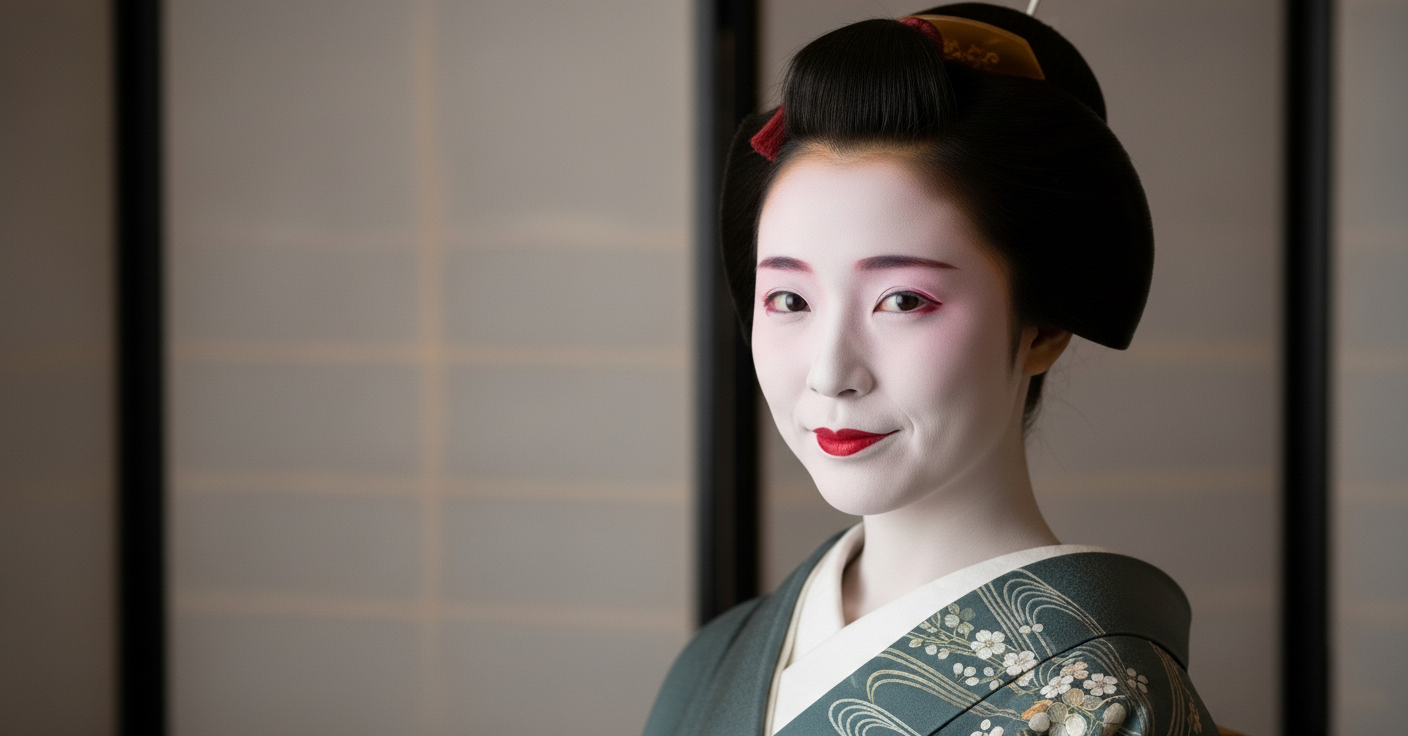
Geiko (芸妓), meaning “person of arts,” are professional entertainers over age 20 who have completed their maiko training. In Kyoto, they’re called “geiko” rather than “geisha” (the term used in Tokyo and other regions). These accomplished artists represent the pinnacle of traditional Japanese hospitality and cultural refinement.
The Geiko’s Artistic Mastery
Geiko are distinguished by their:
- Sophisticated conversation skills – ability to engage clients in meaningful dialogue on various topics
- Advanced artistic abilities – mastery of multiple traditional arts including dance, music, and tea ceremony
- Cultural knowledge – deep understanding of Japanese history, poetry, and seasonal customs
- Business acumen – independence in managing their professional careers and finances
Key Differences Between Maiko and Geiko
Visual Distinctions
Understanding the visual differences helps visitors appreciate the significance of each stage in this cultural tradition:
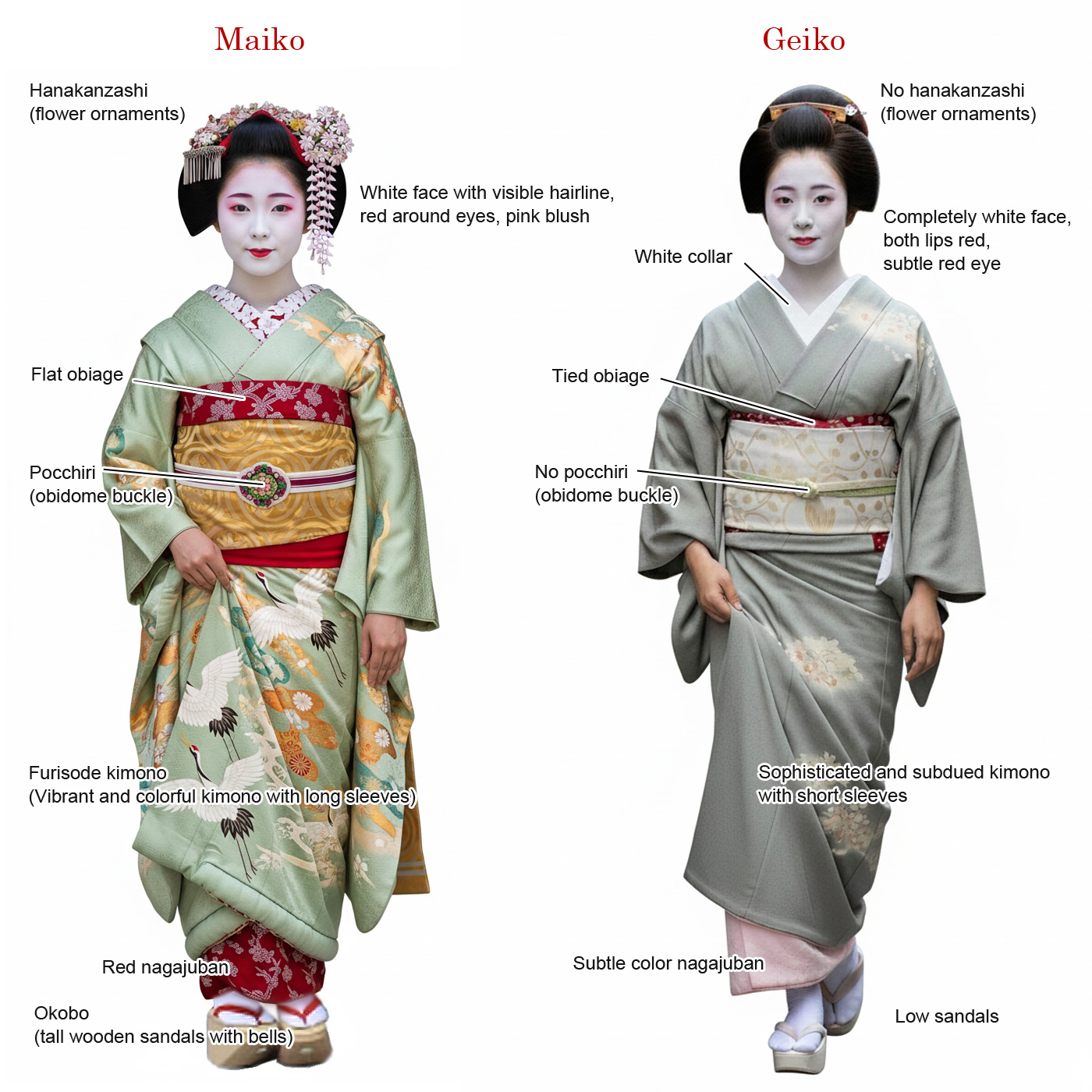
| Aspect | Maiko | Geiko |
|---|---|---|
| Age | 15-20 years old | Over 20 years old |
| Makeup | White face with visible hairline, only lower lip red, red around eyes, pink blush | Completely white face, both lips red, subtle red eye makeup, no blush |
| Hair | Natural hair in “wareshinobu” style with elaborate ornaments | Wig in “shimada” style with minimal accessories |
| Kimono | Vibrant, colorful long sleeves with red collar | Sophisticated, subdued short sleeves with white collar |
| Obi (Sash) | Extremely long and elaborate (5-7 meters) | Shorter, elegant style |
| Footwear | Tall wooden sandals (okobo) with bells | Low sandals (zori) |
Makeup and Beauty
- Maiko: White face powder with visible hairline, only lower lip painted red (initially), distinctive red around eyes, pink blush on cheeks
- Geiko: Completely white face, both lips painted red, subtle red eye makeup, no pink blush
Hair and Accessories
- Maiko: Natural hair styled in “wareshinobu” with elaborate seasonal flowers and dangling ornaments (bira-bira)
- Geiko: Wigs in “shimada” style with minimal, elegant accessories
Kimono and Obi
- Maiko: Vibrant, colorful long-sleeved kimono with red collar, extremely long and elaborate obi (5-7 meters)
- Geiko: Sophisticated, subdued short-sleeved kimono with white collar, shorter, elegant obi
Footwear
- Maiko: Tall wooden sandals (okobo) with bells that create the distinctive “sound of Kyoto streets”
- Geiko: Low sandals (zori) for practical mobility
Skills and Responsibilities
- Maiko: Focus on learning and perfecting basic arts, minimal conversation, primarily entertainment through dance and music
- Geiko: Expert-level performance abilities, sophisticated conversation skills, cultural education, business management
Experiencing Maiko and Geiko Culture Respectfully
Authentic Ways to Interact with Maiko and Geiko
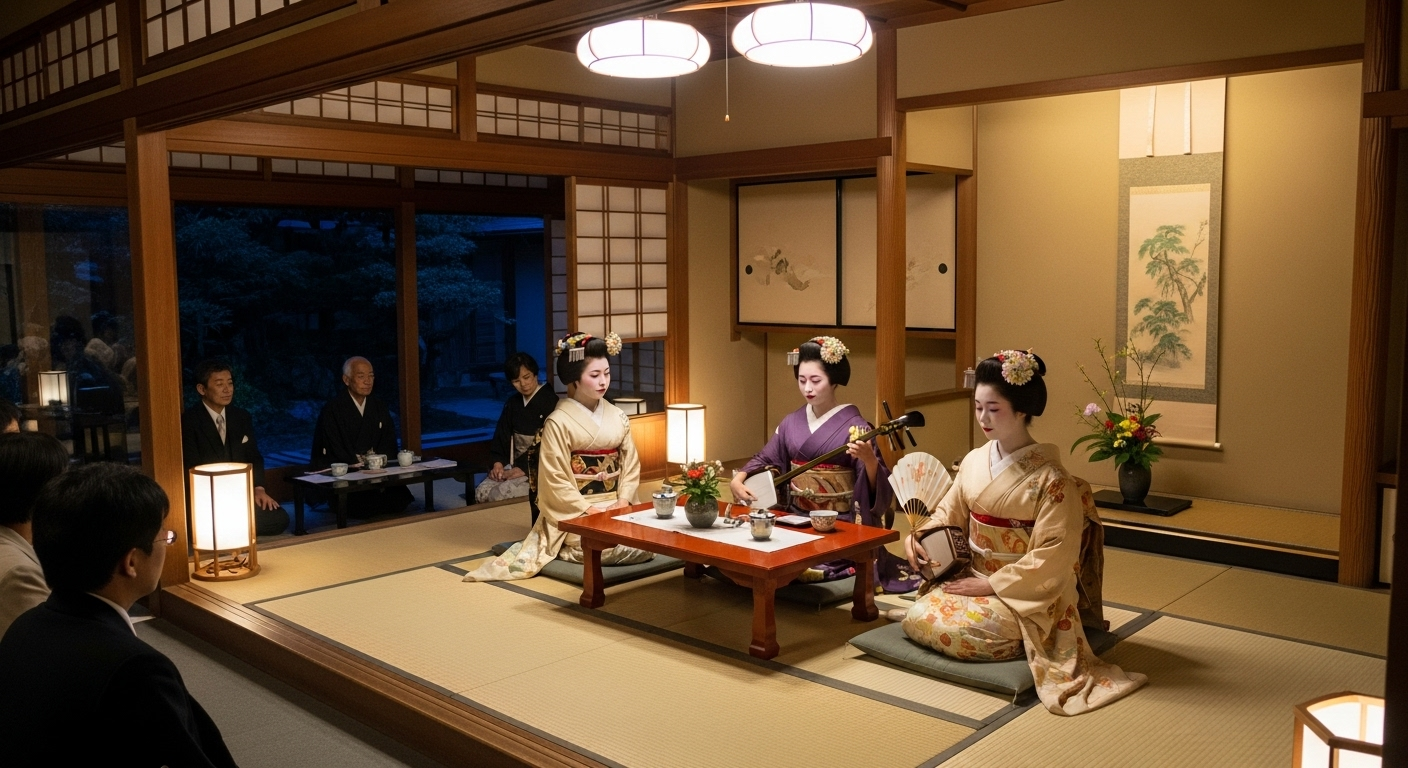
Private Tea House Experiences (Ochaya)
Traditional ochaya offer the most authentic way to experience maiko and geiko culture:
- Ozashiki asobi (banquet entertainment) featuring traditional games, conversation, and performances
- Tea ceremonies conducted by accomplished geiko
- Seasonal performances showcasing traditional dances and music
- Cultural education about Japanese customs and etiquette
Public Performances
More accessible options for international visitors:
- Miyako Odori (Cherry Dance) – annual spring performances in Gion
- Kamogawa Odori – summer performances in Pontocho
- Kitano Odori – autumn performances in Kamishichiken
- Cultural centers offering maiko/geiko shows with English explanations
Maiko Makeover Experiences
While not authentic cultural interaction, transformation experiences allow visitors to:
- Understand the complexity of traditional dress and makeup
- Appreciate the skill required for daily preparation
- Take photographs in appropriate settings without disturbing working maiko/geiko
Essential Etiquette: What Foreign Tourists Must Never Do
Photography and Social Media Guidelines
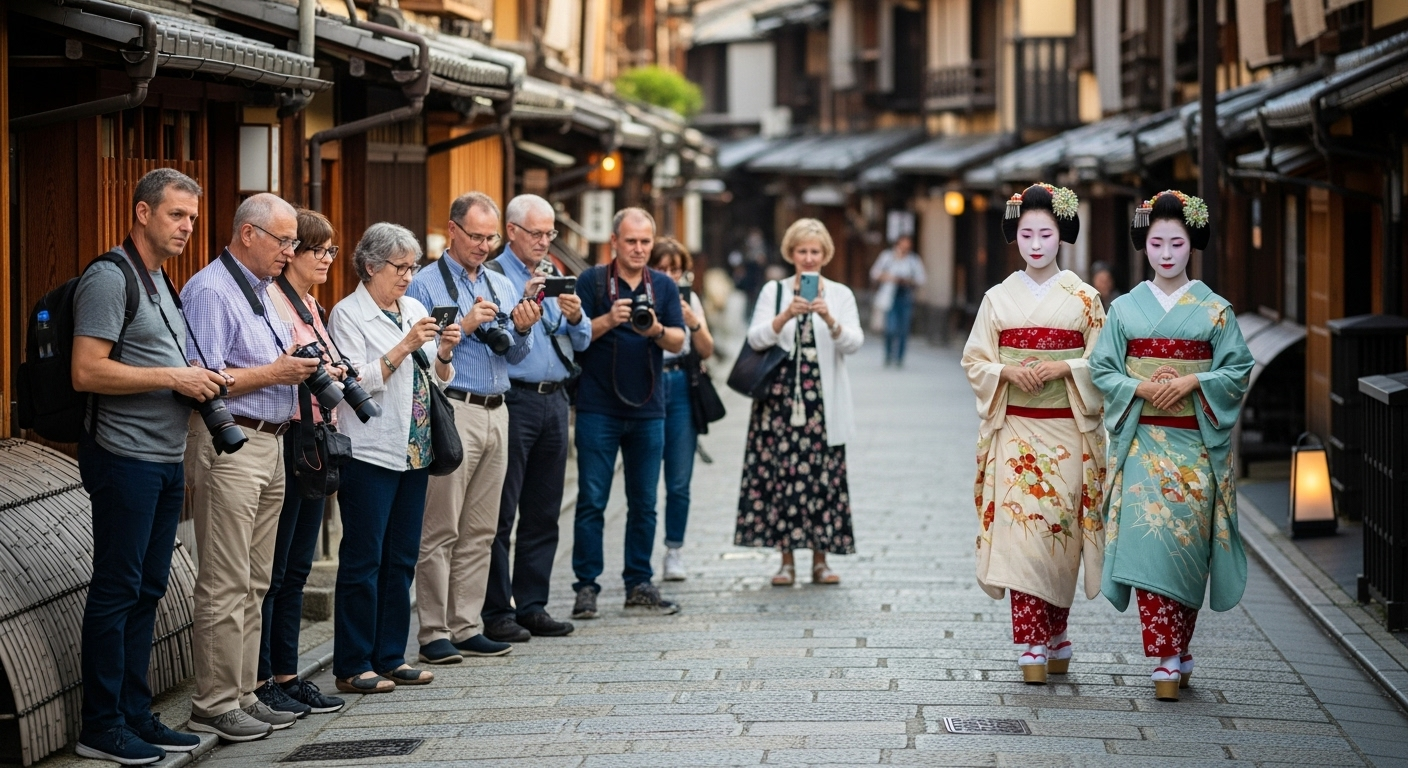
⚠️ Critical Warning
The “maiko paparazzi” problem has become so severe that certain areas of Gion now have photography restrictions and fines up to ¥10,000 ($70 USD).
Photography Violations – Absolutely Prohibited:
- Never photograph without permission – Taking unauthorized photos or videos is disrespectful and potentially illegal
- No pursuit photography – Following maiko/geiko for photos is harassment
- Respect private streets – Many areas in Gion prohibit tourist photography to protect residents’ privacy
- No flash photography – When photography is permitted, never use flash as it can damage delicate makeup and fabrics
Physical Interactions – Strictly Forbidden:
- Never touch maiko or geiko, their clothing, or accessories – This can damage expensive garments and is culturally inappropriate
- Don’t block their path – They are working professionals traveling to appointments
- No calling out or shouting – Avoid disrupting their composure and dignity
- Maintain respectful distance – Give them space to move freely through the streets
Behavioral Guidelines in Geisha Districts
Street Etiquette in Gion and Other Hanamachi
- Walk quietly and avoid loud conversations or laughter
- Stay on public roads – Never enter private properties or gardens
- No food or drinks – Eating while walking is considered disrespectful in traditional areas
- Dress appropriately – Avoid revealing clothing; business casual or better is recommended
- Travel in small groups – Large groups can overwhelm narrow streets and disturb the atmosphere
During Ochaya Experiences
When fortunate enough to participate in formal entertainment:
- Follow the lead of your host or guide
- Remove shoes and sit properly on tatami mats
- Address maiko as “maiko-san” and geiko as “geiko-san” or “onesan” (elder sister)
- Don’t offer food to performers – They traditionally don’t eat during professional engagements
- Engage respectfully in conversation but don’t monopolize their attention
- No personal questions about their private lives, finances, or relationships
Cultural Context: Why These Traditions Matter
Economic and Cultural Significance

The maiko and geiko world represents more than entertainment – it’s a vital part of Kyoto’s cultural ecosystem:
Cultural Preservation
- Living art forms – Maintaining traditions that might otherwise disappear
- Artisan support – Supporting traditional craftspeople who create kimono, accessories, and musical instruments
- Cultural education – Teaching Japanese arts to new generations
- International diplomacy – Serving as cultural ambassadors for Japan
Economic Impact
- Tourism revenue – Contributing significantly to Kyoto’s economy
- Employment – Supporting networks of artisans, restaurants, and service providers
- Cultural exports – Inspiring international interest in Japanese culture
Modern Challenges and Adaptations
The traditional world faces contemporary pressures:
- Declining numbers – Fewer young women choosing this demanding career path
- Tourism impact – Balancing cultural preservation with visitor interest
- Modernization pressures – Adapting ancient traditions to contemporary society
- International misunderstandings – Correcting misconceptions spread by popular media
Planning Your Respectful Cultural Experience
When and Where to See Maiko and Geiko
Kyoto’s Five Hanamachi (Geisha Districts)
- Gion Kobu (祇園甲部) – Most famous and traditional
- Gion Higashi (祇園東) – Smaller, more intimate district
- Pontocho (先斗町) – Narrow alley with traditional architecture
- Kamishichiken軒 (上七軒) – Oldest district with unique atmosphere
- Miyagawa-cho (宮川町) – Less touristy, more authentic daily life
Best Times for Respectful Observation
- Early evening (5:30-7:00 PM) – When they travel to evening appointments
- During festivals – Special public appearances during seasonal celebrations
- Public performances – Scheduled shows open to international visitors
Booking Authentic Experiences
Ochaya Reservations
Traditional tea houses typically require:
- Introductions through established connections
- Advance reservations (often weeks or months ahead)
- Significant investment ($200-500+ per person for authentic experiences)
- Cultural preparation – Understanding basic etiquette and expectations
Tourist-Friendly Alternatives
- Cultural centers with English-speaking guides
- Hotel concierge services for arranging appropriate experiences
- Licensed tour operators specializing in cultural tourism
- Public performances with educational programs
Conclusion: Preserving Japan’s Living Heritage
The world of maiko and geiko represents one of Japan’s most sophisticated cultural traditions, requiring years of dedication and sacrifice to master. For foreign visitors, these artists offer a unique window into Japan’s aesthetic philosophy, emphasizing subtlety, seasonal awareness, and the pursuit of perfection in traditional arts.
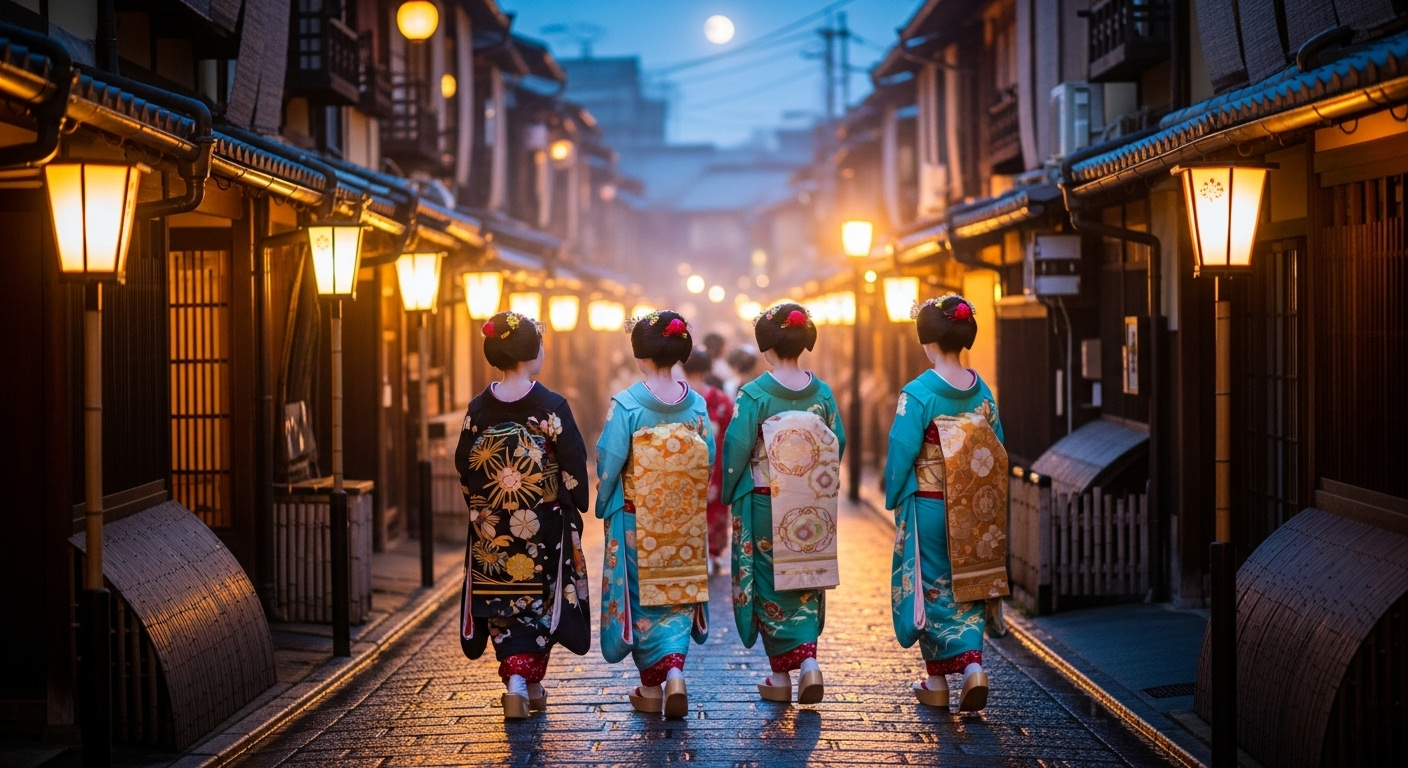
By approaching this culture with respect, understanding, and proper etiquette, international visitors can contribute to the preservation of these traditions while enjoying an authentic glimpse into Japan’s cultural soul. The key lies in remembering that maiko and geiko are not museum exhibits or photo opportunities, but dedicated artists carrying forward centuries of refined Japanese culture.
Your respectful participation in this cultural experience not only enriches your understanding of Japan but also supports the continuation of these invaluable traditions for future generations. Whether observing from a respectful distance on Gion’s streets or participating in a formal ochaya experience, approach these encounters with the reverence they deserve – and you’ll discover the true beauty of Japan’s living cultural heritage.